


It is not entirely clear what being an ‘associate’ member of the European Union would mean in real terms, but I would much rather see Canada as a peer nation within a union than as a vassal nation to an empire. Pierre Poilievre, the Conservative leader who we narrowly dodged as prime minister last year, disagrees.
Being an almost-member of the European Union in this exact way has not been done before, but there are several countries that have relationships with the EU that fall below the standard of full membership, so what an ‘associate membership’ looks like, if we pursue it to its logical conclusion, is a simple matter of negotiation.
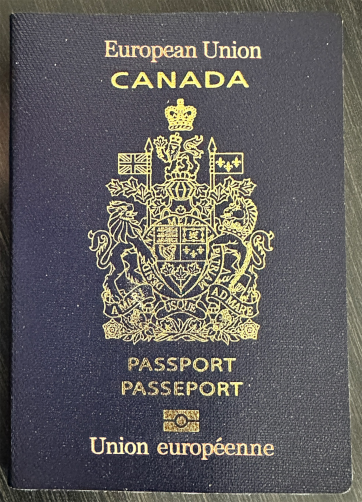
It is entirely too early to define what the relationship would look like, but it is not too early for us to express our aspirations for such a deal. Nor, apparently, is it too early for Canada’s Conservatives to reject its final results before any of us know what they might be.
Joining the European single market would be hugely beneficial to Canada, giving us even greater reciprocal access to the European market than we have under CETA. Allowing visa-free access for European citizens and Canadian citizens to each others’ lands beyond the university-focused Erasmus+ program Carney mentioned in his speech, and maybe even including Canada in the Schengen Area that goes beyond the borders of the pure EU members, adding Switzerland, Iceland, Liechtenstein, and Norway, would be a dream come true — though would require beefing up our border with the United States.
Opening the borders between Canada and Europe does have the risk of raising the hackles of the anti-immigrant crowd, though, and Canada’s generous immigration system might cause some tension at that point in the negotiations even from the European side. Associate membership and all this potential trans-Atlantic cross-pollination is far from being a fait accompli.

There are direct consumer benefits possible. Canada’s vastly over-priced domestic aviation system could use some competitive pressure from ruthless European low-cost players like Ryan Air, for example.
Participating as part of the much greater European whole would put us in a much stronger position in dealing with the proprietary high tech world including AI, social media, and how to rebuild the traditional news media as something other than a wholly owned subsidiary of the oligarchy. It is the EU driving small but significant changes such as mobile phone manufacturers being forced to use the USB-C common charger, and the upcoming requirement that all mobile phones have user-replaceable batteries. On our own, Canada does not have the weight to make those types of changes stick. If we are teamed up with Europe, those reforms will be forced into the North American market.
We have learned through the Online News Act how ineffective Canada is on its own in this regard. In the government’s efforts to force social media companies to contribute toward the traditional media industry they linked to so prolifically, some social media giants simply… stopped linking them. As Carney suggested in his speech, we cannot survive as a lone tree — we need the strength of the forest to survive the current storms.

Of greater interest, though, is on military and defence matters. Canada under Mark Carney has spent the last several months working on connecting our military capabilities with Europe rather than the Unites States. As with NATO, the European Union has a mutual defence clause. It differs only slightly from NATO Article 5 in that any member under military attack may invoke it, obligating the rest of the union to react according to their own means, but there is not a permanent unified command and control structure to unify the responding forces.
In real terms, the European Union is gradually replacing NATO, and it will be important for Canada to be on the inside of that alliance once the United States realises it has functionally killed its own defensive treaty and alienated every one of its traditional international allies. The greatest military threat to Canada has very much become the United States of America.
Trump’s reaction to the EU and Canada talking should demonstrate that clearly. If Russia’s excuse for invading Ukraine is that they were trying to join NATO, the US’s excuse for invading Canada will be that we were trying to join the EU. In the eyes of both the United Staets and Russia, our countries exist to serve their interests within their ‘regions of influence’, not our own.

Canada’s long term agreement with Ukraine announced last week during President Zelenskyy’s visit is important here. We did not commit to building two million drones in collaboration with them to do light shows over the Toronto waterfront. We are heeding the lessons of their war of Russian aggression as they may apply to American aggression against a Canada refusing to fall in line.
Ukraine has been at the front lines of defending Europe in a brutal conventional war whose casualties number over a million. NATO and European allies have offered significant ad hoc support, but both NATO and the EU appear to have been reticent to include the country into either alliance so far precisely because of that war. Ukraine is neither a member of the European Union nor NATO and their full ascension to either would put the rest of the significantly overlapping alliances directly at war with Russia thanks to their mutual-defence clauses.
It is an honour for Canada to be invited to join the EU in whatever capacity, but in a most Canadian way, we should be holding the door open before walking through it, ushering Ukraine in first with a polite ‘after you!’ As Carney said, the Canada-EU alliance should create “an alliance open enough that others can join.”
There is no ally that has proven its capacity and resolve more thoroughly and at greater cost than Ukraine, and ending western equivocation would finally bring that bloody war to its end. Moreover, we need to know that if push comes to shove and the Americans try to apply the Donroe doctrine by force against Canada, our allies will actually have our backs.
The greatest risk for Canada joining the EU, though, is not found within what Europe has to offer or what Canada can offer Europe. It is also not from allowing current European Union citizens to live and work visa-free in Canada. Nor is it the prospect of becoming more heavily involved in Ukraine’s on-going conflict, nor even in the potential of allies hiding behind the word ‘associate’ should we find our own country invaded by our ostensible NATO ally and wishing to invoke the EU’s mutual defence clause. Rather, it is the knee-jerk reaction of right wing extremists egged on by Russian and American disinformation who want to destroy it from the inside.

As his statement the day this was announced shows, Pierre Poilievre cannot begin to imagine a world in which Canada is not subservient to the United States, regardless of the state of that country. His vision is to preserve NATO as our primary relationship with the European Union. Articles 10, 11, 13, and 14 of the NATO Treaty collectively make it clear that NATO operates and serves at the pleasure of the United States.
Conservatives will actively undermine our cooperation and association with Europe if it endangers the supremacy of the United States. They say “Canada must be independent and sovereign,” which would be the case with European partners — but not American dominance. Canadian sovereignty, to Poilievre, requires permission from the White House. We know what the White House wants, because, under Carney, we walked away from the negotiating table when they told us.

Should he and his followers ever achieve power in Canada, their ‘Canexit’ campaign would be far more destructive than Brexit could ever have been. The UK, regardless of treaty, still remains proximate to Europe, surrounded on all sides by EU members.
Like Brexit’s advocates, Canada’s Conservative leader was already circulating misinformation on what our cooperation with Europe could mean on the day the idea became an official concept. No EU taxes, he proclaimed, as if EU members do not control their own tax systems. No EU open borders, he dog-whistled. He would rather make Canada a vassal to a fascist United States than a partner to a democratic Europe.
Should we succeed in making Canada a member of the European Union with whatever qualifier or prefix we determine, the danger is our own political volatility. One bad future government ending the arrangement ala Brexit would cause long-term, catastrophic damage to Canada. A de-Europed Canada would be thrust back into the arms of the Americans with nowhere else to turn, our bridges burnt as our other international partners lose trust in our country, and our closest allies become alienated by our full reversal — and they would be under no geographic imperative to work through it.
We only need to look at how the world is treating the destabilised United States to see how quickly and how thoroughly this can happen. In spite of the clear lessons and the enormous opportunities before us, Canada’s Conservative leader is already out there stating we are better off with Trump than with Europe showing, once again, where his loyalties truly lie.
It may be unclear what the EU associate path will look like, but it is absolutely certain what the US associate path will be, and form that, thank you, but no thank you