


Pablo Rodriguez’s spectacularly short career as Quebec Liberal leader came to an abrupt end without him ever holding a seat in the province’s legislature. With the Phoenix-like rise of the Parti Québecois, it leaves us on the precipice at a most inopportune time.
Premier François Legault has indicated that he plans to make the 2026 Quebec provincial election about whether or not Quebec should have a third independence referendum, with him taking a position against it taking place. As his government is on the outs across regional polling, this is a dangerous game. Indeed, as a former PQ cabinet minister himself, it is completely rational to wonder if Legault wants to make the election a referendum on a referendum in order to get the referendum he has always wanted while offering himself plausible deniability.
If Legault does successfully frame the upcoming provincial election as being entirely about whether or not to grant current PQ leader Paul St-Pierre Plamondon (PSPP in Quebec parlance) a mandate to hold such a referendum, giving him a majority would grant him carte blanche to do so. It is a fool’s errand.
As Pierre Poilievre could tell you, though, PSPP may have peaked entirely too early in the election cycle. Pablo’s rapid departure opens the door for the PLQ to try again, to identify a palatable, ethical, unapologetic federalist who will remind Quebeckers that Canada’s strength, culture, and identity owes disproportionately to Quebec’s contribution. That Canada is greater than the sum of its parts precisely because of who we have confederated.
It is a spectacularly dangerous time to discuss breaking Canada up. It is obvious why the Alberta separatists, who admire Donald Trump and wish Canada were part of his United States, want their own referendum to prepare the way to joining their idol. It is less obvious why Quebec separatists feel that this is their moment.

In a time when an unstable United States, teetering on the edge of total democratic collapse, openly musing about the “Donroe Dictrine” and annexing Canada, it is not the moment to be fighting amongst ourselves. It is, however a moment where a provincial separatist movement may actually succeed. Caveat emptor.
Deciding the fate of a nation on a simple ill-informed referendum where the stakes are not plainly and honestly explained to the voters has the habit of causing rather unhelpful outcomes.
In 2016, the the United Kingdom’s Natural Environment Research Council (NERC) held a contest to name a new research vessel. At the same time, the UK’s Conservative government held a referendum on exiting the European Union, calling the project ‘Brexit’.
The British public voted, respectively, to name the ship Boaty McBoatFace and take Britain out of Europe. The government had the good sense to override the first, naming the ship the Sir David Attenborough, and offering up one of the ship’s unmanned submersibles as a painful acknowledgement of the public will. They did no such thing with the Brexit vote, which won far less resoundingly, resulting in the years since in a measurable atrophy of the British economy and generally worse outcomes across the board for the country once at the centre of the largest empire ever to have existed.
That there was foreign interference in that referendum is now widely suspected. Russia has a strategic interest in undermining the stability and strength of western democracies, and Brexit was a coup de force in achieving that instability.
Similarly, the election — and re-election — of Donald Trump owes as much to foreign interference as to the American corporate Democrats’ inability to express or implement genuine progressive change. Foreign interference would be far less effective against a solid opposing narrative.
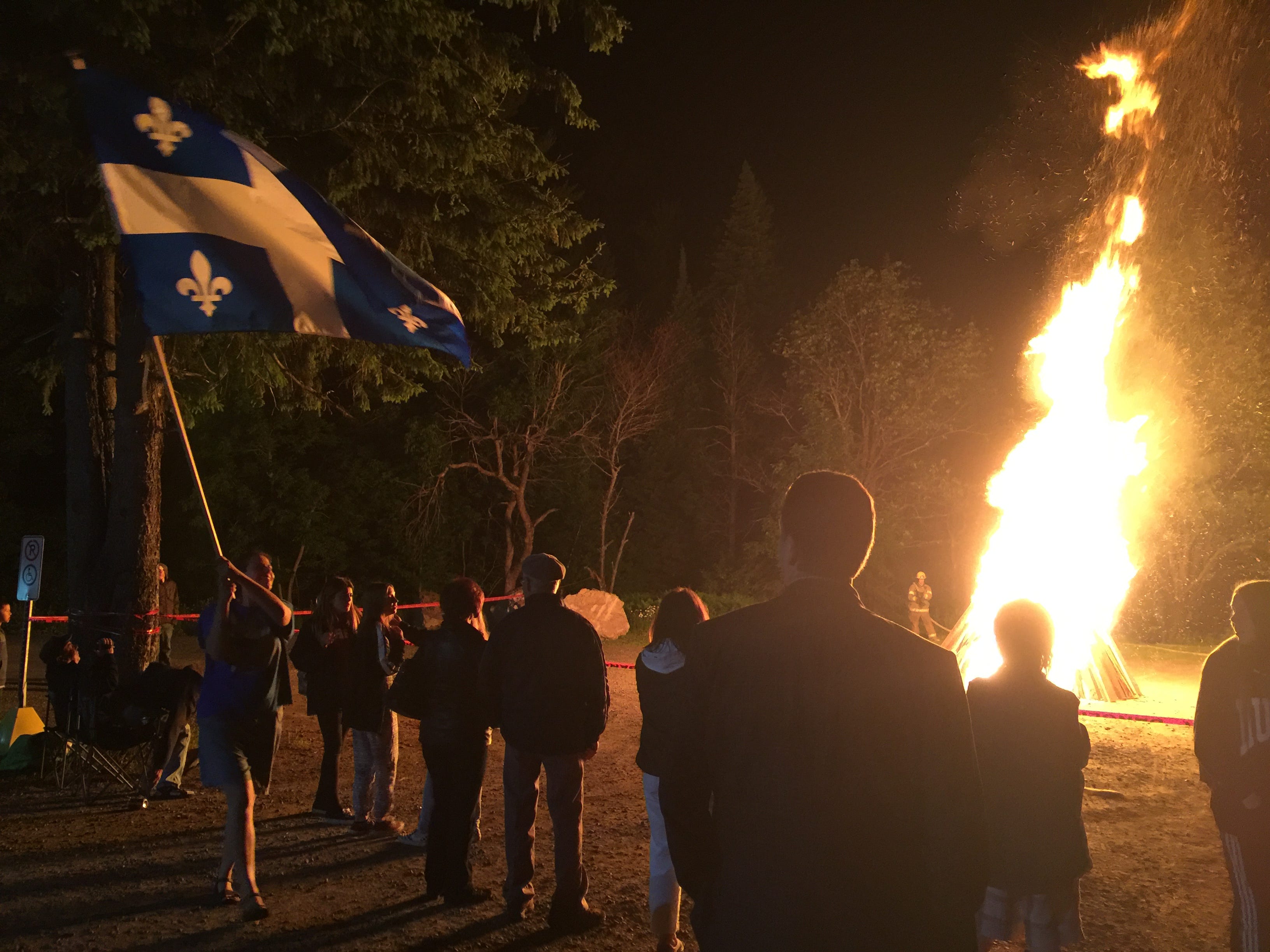
Back to Quebec, then, where a prospective referendum on independence currently lacks anything resembling a credible opposition leader, and where foreign interest in destabilising our country is no less strong than it was during Brexit or the rise of Trump.
Legault as the prospective leader of the no side is downright farcical. The federal Liberals are (rightly) focused on the threat from the south, but are entirely too Toronto-centric to fully grok the situation unfolding in Quebec. Prime Minister Carney may be doing a very credible job of defending a united Canada’s interests on the world stage, but defending Canada as a concept on the Quebec stage is an entirely different challenge.
While the federal parties came together in 1995 to defend Canada, Pierre Poilievre’s personality and style would probably do more for the No side by campaigning with the Yes side than by representing the Canada he insists is broken. He has done more to promote Canadian disunity than any federal leader since Preston Manning.
If Poilievre campaigns against Quebec separatism, Quebeckers will be forced to confront the idea that staying in Canada could lead to being governed by this man, and want out to avoid that outcome. Though if he supports the ‘yes’ side on the basis of cutting Quebec loose, equivocating voters might vote ‘no’ out of pure spite!
It all means that the Quebec Liberal Party must put all of their efforts into finding a credible leader, detached from the party’s sordid past, who will achieve one of two things: prevent PSPP from taking power in the first place and, failing that, mount a credible and supportable defence of Canada within Quebec should PSPP win Legault’s referendum on a referendum.
With Trump and the sycophants that surround him hungrily eying Canada’s natural resources, and viewing our sovereignty as little more than a speed bump in the way of acquiring and controlling the entirety of the Americas, this is not the time to endanger Canadian unity.
Which leaves us in the unenviable position of being entirely dependent as a country on one of two unlikely scenarios: Quebec opting to stay with Legault, or hoping the PLQ can pick a leader up to that formidable challenge.
Whatever the outcome, the rest of Canada had better sit up and pay attention.
Having lived through the two previous referendum cycles in Quebec (and with the memory of the PTSD it caused throughout society), I fear we are heading to the brink. I was seriously discouraged by the election of Rodriguez as leader of the PLQ and am relieved to see this relic of the bad old days of "soft nationalism" gone. But we are left without any good choices in Quebec unless, like you say, some formidable champion of a united Canada appears. Even here in rural Quebec, the base of his support, Legault is reviled. Québec solidaire never made inroads outside of east-end Montreal and has turned its guns on itself. I don't think people have understood the risks of voting PQ but to many it is the only option whether they support the idea of a referendum or not. As you suggest, Legault is playing with fire in the exact way David Cameron did in Britain. And with Danielle Smith having already lit the match in Alberta, we are heading into a very scary year.
The PQ might well ecome the next ruling party in Quebec thanks to the gerrymadered political system in Quebec. Anglophone ridings such as Westmount are the largest while rural PQ ridings are even smaller than their official electoral numbers. Quebec law allows voters to vote either in their home or in their country homes. This enlarges rural ridings for voting purposes so that when we count votes. frequently less than half of the electorate in rural rings statistically did not vote,
Consequently the last time a Quebec Government won a majority of the actual electorate was the 1950's.
Quebec governments seldom need to win with the greater Montreal vote where most of the actual electorate live. Consequently we should have a Referendum rather than the Plebiscites
we actually have. A Referendum asks the citizens what they want by asking a series of relevant questions Sadly, the Canadian media as well as our politicians are remarkably out of touch with reality as well as the electorate themselves.